

Graeme Clark, Ph.D.
Laureate Professor Emeritus, The Graeme Clark Institute for Biomedical Engineering, The University of Melbourne
Graeme Clark set out as a five-year-old to “fix ears” because his father was deaf. After training in surgery, he received a Ph.D. in auditory neurophysiology from the University of Sydney and researched methods of stimulating the cochlea. He led the engineering of the most complex package of electronics to be implanted in a person and performed the surgery in August 1978. Working with YC Tong and a small team, he discovered the first code to enable a patient to understand speech without lipreading.
In 1979, Clark assisted in creating the company Cochlear Limited and getting approval from the US Food and Drug Administration for marketing the implant internationally. He led research to improve speech processing strategy and develop bilateral implants, and was the first to implant a multi-channel device into children, the first implant of any type to be approved for children by the US FDA.
He has continued speech processing research through an Australian NH&MRC programme grant and US National Institutes of Health contract and discovered a Spectral Maximum Sound Processing strategy. It has been developed industrially by Cochlear Limited as ACE and is in widespread use. Clark also led studies through the University of Wollongong to develop intelligent polymers for drug delivery with cochlear implants and in spinal cord repair.
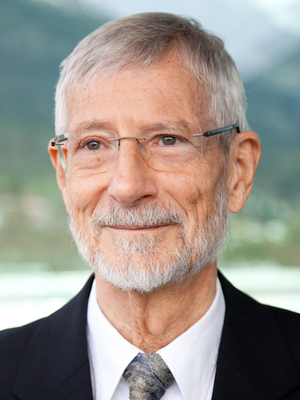
Erwin Hochmair, Ph.D.
Co-Founder, MED-EL
Professor Emeritus, University of Innsbruck
Erwin Hochmair received his Dipl.Ing, and Dr.techn. degrees in electrical engineering at the Technical University of Vienna, Austria, in 1964 and 1967, respectively. During his ongoing university career, he had the opportunity to spend two years at the NASA Marshall Space Flight Center in Huntsville, AL, as a postdoctoral research associate performing research on CMOS circuits. This experience turned out later to be one of the fundamentals for the design of the world’s first microelectronic multi-channel cochlear implant, developed and built at TU Vienna together with Ingeborg Desoyer (later Ingeborg Hochmair), who then had just finished her studies in electrical engineering. The device was implanted in a patient in 1977 and further implantations in other patients followed. Despite the open skepticism of well-known ENT-surgeons, in 1978, some rudimentary speech understanding could be achieved. This opened a wealth of new research possibilities, requiring further research to enhance the capabilities of the cochlear implant system. From 1985 to 2009 Erwin Hochmair was a full professor of applied physics at the University of Innsbruck. In 1990 he co-founded, together with Ingeborg Hochmair, MED-EL Company in Innsbruck. Erwin Hochmair has co-authored more than 100 scientific publications and patents. He received multiple honors, including the Russ Prize (2015) and the Queen Elizabeth Prize for Engineering (2026).
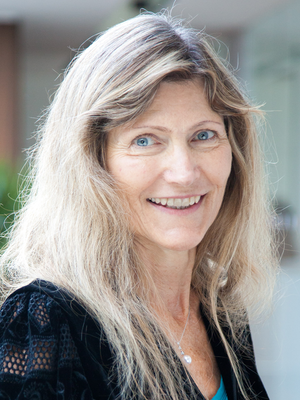
Ingeborg Hochmair, Ph.D.
Chief Executive Officer and Co-Founder, MED-EL
Ingeborg Hochmair is an Austrian electrical engineer, pioneering inventor, and Chief Executive Officer of MED-EL, a global leader in implantable hearing solutions. She co-developed, together with Erwin Hochmair, the world’s first microelectronic multichannel cochlear implant, which was successfully implanted in Vienna in 1977 — an achievement that fundamentally transformed auditory neuroprosthetics and created a new pathway to sound and speech perception to individuals with profound hearing loss. Hochmair earned her doctorate in electrical engineering from the Vienna University of Technology in 1979 as the first woman in Austria in this field. Her research focused on chronic multichannel stimulation of the auditory nerve, laying the foundation for modern cochlear implants. Following academic appointments in Vienna, research at Stanford University’s Institute for Electronics in Medicine, and work at the University of Innsbruck, she co- founded MED-EL. She has been guiding the company’s evolution into a global innovator, which now has more than 3,200 employees and has made implants being used in over 140 countries. Hochmair’s work spans translational research in hearing implants and other implantable neuroprosthesis, individualized precision cochlear implantation, drug-eluting electrodes and fully implantable hearing systems. She has authored over 120 scientific publications and patents and has received numerous prestigious honors, including the Lasker–DeBakey Clinical Medical Research Award (2013), the Russ Prize (2015), and the Queen Elizabeth Prize for Engineering (2026).

Michael Merzenich, Ph.D.
Francis Sooy Professor Emeritus, University of California, San Francisco
Chief Scientific Officer, Posit Science
Michael Merzenich is widely acknowledged as a co-inventor of the multiple-channel cochlear implant, and as one of the scientists most responsible for our current understanding of lifelong brain plasticity. He and his colleagues conducted seminal research defining effective strategies for safely and effectively electrically stimulating the auditory nerve to restore speech reception in individuals with profound hearing losses. Cochlear implant model development studies have been translated, with commercial extension, to generate a sense of hearing for hundreds of thousands of individuals with profound hearing losses.
Inspired in part by the remarkable brain plasticity recorded in cochlear implant patients, his research teams over the past four decades have focused on strengthening the physical status and functional performance of sensory and higher-level brain processes. Translational studies of brain plasticity led to the development of computerized assessment and brain-training strategies shown to restore and sustain the neurological health and performance abilities of millions of neurologically and psychiatrically struggling children and adults.
A member of the US National Academies of Science and Medicine, Merzenich has been awarded the Russ Prize (for cochlear implant development) and the Zülch, IPSEN and Kavli Prizes (for translational studies of brain plasticity). Merzenich has published more than 400 scientific reports, been awarded 67 US patents, and led the creation of three medical technology companies.
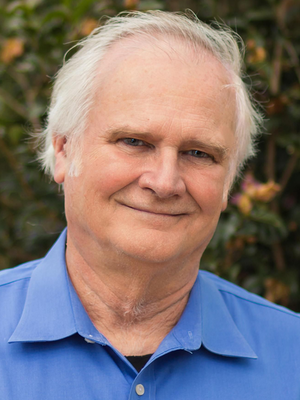
Blake Wilson, Ph.D.
Director of the Duke Hearing Center, Duke University Medical Center
Blake Wilson is the Director of the Duke Hearing Center and is an Adjunct or Consulting Professor in each of three departments at Duke: Head and Neck Surgery & Communication Sciences, Biomedical Engineering, and Electrical and Computer Engineering. He has been involved in the development of the cochlear implant (CI) for four decades and is the inventor of many of the signal processing strategies used with the present-day CIs. One of his papers, in the journal Nature, is the most highly cited publication in the principal field of CIs. He is also the Chair of the Lancet Commission on Hearing Loss.
He or he and his teams or colleagues have been recognized with a high number of awards and honors, including the 2015 Russ Prize and the 2013 Lasker~DeBakey Award. Wilson is a recipient of the Distinguished Alumni Award from the Pratt School of Engineering at Duke (in 2007) and from the University as a whole (in 2019; the 42nd recipient of that Award). Additionally, he is a member of the US National Academy of Engineering and a Fellow of the Institute of Electrical and Electronics Engineers, the Acoustical Society of America, and the National Academy of Inventors.