
Prize Laureates
2026 Prize
The Modern Cochlear Implant
Prize Laureates:
Graeme Clark, The University of Melbourne
Erwin Hochmair, MED-EL; University of Innsbruck
Ingeborg Hochmair, MED-EL
Michael Merzenich, University of California, San Francisco; Posit Science
Blake Wilson, Duke University
Citation: For the development of the modern cochlear implant, the first medical device to generate a human sense by directly interfacing with the nervous system. More than one million people worldwide have elected to use this pathbreaking technology to hear and engage in spoken communication.
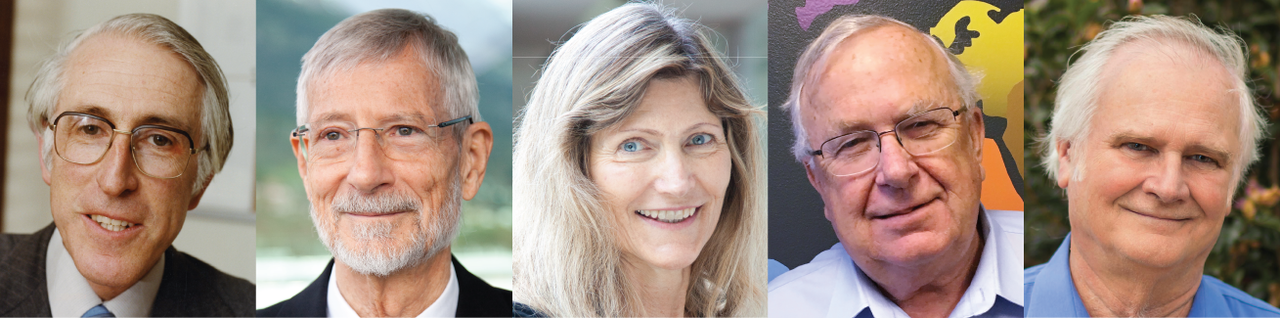
Credit: The University of Melbourne, MED-EL, Posit Science, and Duke University School of Medicine
For laureate bios, click here.
Past Laureates
2025
CAR T-cell Therapy
Carl June
University of Pennsylvania Perelman School of MedicineBruce Levine
University of Pennsylvania Perelman School of MedicineIsabelle Rivière
TakedaMichel Sadelain
Columbia University

Credit: University of Pennsylvania Perelman School of Medicine, Memorial Sloan Kettering Cancer Center, Columbia University Irving Medical Center
Citation: For developing chimeric antigen receptor (CAR) T-cell technology for personalized and scalable cancer immunotherapy. By genetically engineering a patient’s own immune cells, CAR T-cells precisely target and destroy cancer cells. CAR T-cell therapy has provided durable remission for tens of thousands of patients with otherwise incurable blood cancers.
2024
The T7 Expression System
F. William Studier, Brookhaven National Laboratory
Citation: For developing technology that uses components of the T7 bacteriophage for rapid, cell-free, and bacterial expression of any gene of interest. By enabling the production of critical proteins and RNAs on a massive scale, the T7 Expression System has accelerated biomedical research and has helped to extend millions of lives worldwide through its use in therapeutics, diagnostics, and vaccines, including the mRNA vaccines that protect against COVID-19.
2023
Efficient DNA Synthesis
Marvin H. Caruthers, University of Colorado

Citation: For developing methods enabling efficient, accurate synthesis of specified DNA and RNA sequences, making possible the genomic revolution in biological science and medicine and improving the lives of hundreds of millions of people globally through diagnostic tests and genetic medicines.